Label

Showing posts with label aquaculture. Show all posts

Wednesday, November 2, 2011

Indonesian Government Must Resolve Issue of Fish Meal Production

Dependence on imports of fish meal as feed raw material to make Indonesian Poultry Society Forum (FMPI) asked the government to seriously develop these products themselves.

"The cost of production for poultry or fish aquaculture 70 percent comes from food, but the raw material in the form of fish meal we still have to import," said Coordinator FMPI, Don P Utoyo, through discussion and press conference Viv Asia "Reflecting on the Farm and Agribusiness Excellence Strategy Fishing Thailand "here on Wednesday.

According to him, the constraints of Indonesia to be able to produce fish meal itself because the producers of fish meal processing with a fisherman who could supply the raw materials their own ways.

"The perpetrator was still fishing effort on their own path. So can not process their own fish meal, but its resources there," he continued.

He said the government should be able to integrate suppliers of raw materials to processing fish meal, so that raw materials do not need to be exported again.

"In addition, we need to wait for the government's plan to provide incentives for the processing of this raw material feed. This is necessary in order to no longer support the import dependence," said Don.

Earlier in the discussion kepentinan fisheries stakeholders in the Ministry of Maritime Affairs and Fisheries (MMAF), Head of Aquaculture Research Center for the CTF, Endhay Kusnendar, reveals further research is needed to replace fish meal given the amount of demand and price increases.

Price per metric ton of fish meal which jumped from 600 dollars to 2,000 U.S. dollars of the more burdensome in the homeland of fish farmers.

Look for alternative sources of protein solution in the form of a caterpillar magot of coconut oil is also still have to continue to be tested. The problem, the current surge in oil prices resulting in the production magot considered twice by the feed producers, he said.

"So it should be studied together is roughly what this fish meal replacement. In Australia, algae has begun to be developed to replace the fish meal protein. It can also be developed in the ground water due to abundant raw materials," continued Endhay

Read More......

Ornamental Fish Farming Open Export Opportunities in Indonesia

Freshwater ornamental fish culture was able to give life to many people at it. In addition to people like going to the beauty of ornamental fish, there are many people who depend of cultivation and marketing of ornamental fish species vary. Not infrequently, some farmers are beginning to pursue the cultivation of food fish such as catfish, tilapia, etc. guramih switch pursue ornamental fish culture. All was done because of the economic potential of ornamental fish farming more lucrative than fish consumption. With maintenance and feeding patterns are almost the same as the consumption of fish, ornamental fish culture capable of generating greater income because the prices are more expensive ornamental fish. The key to cultivating ornamental fish are happy in the painstaking and maintain it.

When compared with the cultivation of fish consumption is almost the same maintenance problems while sales are usually rewarded with a system of fish consumption by the kilogram, ornamental fish valued by the system per fish, with fish farming business so much emphasis quantity of consumption, thus requiring extensive land and facilities more. Farmed fish is more stressed ornamental qualities so that it can be done in a narrow area and can be done as a sideline. If you do not have a vast pond, ornamental fish farming can be done in the aquarium or cement tanks are quite small. If the land available is small enough, we must be more selective in the maintenance of ornamental fish. Ornamental fish are kept pretty good quality, while a lack of good quality should be diafkir due to take place.
There is a wide range of economic Valuable Ornamental Fish is high among other Koi fish, Manfish, Chef, Niasa, Redfin, Lemon, Comets, Sumatra barb, Black Ghost, crocodiles, Arowana and other ornamental fish species. Ornamental fish is a common ornamental fish hobbyists sought and cultivated fish farmers.

One reason why the cultivation of ornamental fish was chosen in addition to having a high selling price, the process of spawning and seed treatments do not require large capital and business hatchery / farmed fish is still in certain areas so that still has vast potential. Because like sometimes ornamental fish enthusiasts willing to spend money to millions of dollars to have an ornamental fish hinting they want. This is what sometimes makes ornamental fish prices soared. In addition to the beauty of ornamental fish preference factors also contribute to determine the price. In general, fish that has a shape, color, beautiful complexion would be worth quite expensive. Herein lies the key to the success of ornamental fish farming, producing fish are beautiful and good quality.

The existence of ornamental fish itself is no longer as mere entertainment or hobby but has evolved into objects to be utilized for the benefit of education, research, medical and nature conservation purposes. Until now, this freshwater fish is one type of non-oil export commodities that fisheries can contribute substantial foreign exchange. With a wealth of ornamental fish are abundant then the chances of Indonesia as an exporter of this commodity is very wide open. Ornamental Fish Farming feasible so intensified in the community.

Ornamental fish farming is one business that provides an alternative source of income to increase income of farmers / entrepreneurs ornamental fish. Ornamental fish culture business prospects sufficiently developed. This is due in ornamental fish culture has advantages as follows:
1. The technology is easily absorbed and applied, because the technology used is quite simple
2. Ornamental Fish cultivation can be cultivated household / small business, do not need large area
3. Rapid turnover of capital, can be harvested in a short period of time.
4. Ornamental fish farming is able Absorb labor.
5. Promising market both domestic and export markets.

Profile of Some Ornamental Fish Farmers

One example of ornamental fish breeders are quite successful breeders of ornamental fish in the city of Jakarta, are now starting to receive orders from abroad such as Japan and England, while the ornamental fish that are of interest are the tetra species of freshwater fish, botiya and zebra. An ornamental fish breeder, in the Swamp Lumbu, Bekasi, Miskun, said demand ornamental fish started coming from overseas buyers and recently he has sent as many as 10 boxes of fish to Japan. Marketing of ornamental fish to come out of the country's interest originated from fish enthusiasts from abroad with the beauty of the fish are cultured in Bekasi and the price is relatively cheap. Efforts ornamental fish culture has been able to increase the local economy and even Bekasi became known as a qualified supplier of ornamental fish.

Another example is Mina Prosperous Farmers Group was formed by the Fisheries Department Tulungagung provincial, district consisting of ornamental fish and the like in the Village Bendiljati Wetan.Pemilik hatchery and aquaculture business in the early plots set up his business take advantage of two existing pools, the owner benefits from the added capital to make the pond behind and front of his house, now has 40 plots around the house and pool location pool with the other 45 plots of land all 3 ha. The development of ornamental fish culture is getting more and more increased since the business was used as a living subject that is able to improve the welfare of the family.

Another success story Koi Breeder Sangkuriang Farmers Group, Farmers Group, with its secretariat at Jln. No. Sangkuriang. RT 1 RW 5 7 Ex. Cipageran, district. North Cimahi, City Cimahi. Farmer groups are a collection of Ornamental Fish Farmers Koi has a background of concern founders saw koi fish farmers in West Java which is less advanced. Though the famous koi blitar excel in Indonesia at this time, the seeds came from West Java. After passing through a long process now Sangkuriang a rating of two Koi Breeder Koi Fish in the international competition in Jakarta in February 2009. This championship is an international championship Koi who happened to be implemented in Indonesia.

According to Ule, Founding Farmers Group Sangkuriang Koi Breeder Koi fish farming has a favorable prospect for many and not limited market. In addition, koi fish sales are relatively stable when compared to fish is just booming louhan moment. Similarly, the treatment is also relatively cheap compared Arowana fish. Each month the group who managed Ule farmer can make a profit of at least Rp 15 million.

Freshwater fish farmers need government attention. For freshwater fish culture has a high potential to improve the economy of farmers that spread in the districts / cities in North Sumatra.

"We continue to concentrate on a facilitator to bring together farmers with the government and all investors. Because the main constraints of farmers in developing freshwater fish farming, namely due to limited capital," said Chairman of the Indonesian Young Entrepreneurs Association (Hipmi) Sumut Aldi Said Al Idrus accompanied by Deli Serdang Hipmi committee when reviewing the ornamental fish breeding locations in the Village Sekip, Lubuk Pakam.

It is said, in addition to limited capital, the farmers also lack insight and business networks. Therefore, Hipmi will provide training with the involvement of relevant agencies. "They also often have difficulty in marketing."

Before reviewing the location of freshwater fish culture, especially the cultivation of ornamental fish in two places, namely Lubuk Pakam Sekip Village and the Hamlet I Anyar Reef Village, Banyan, all administrators and trustees Hipmi Hipmi Sumatra Deli Serdang do friendship with freshwater fish farmers at home Rofik Jalan Masjid I Sekip Village.

In that meeting, unless the third known obstacles often encountered the farmers, they are also difficult to maintain the standard selling price of the crop of fish dressing. So that this condition be exploited by the middlemen.

Pest Control

In front of North Sumatra Hipmi board consisting of Aldi Said, Aulia Rahman SE, ZE Mukti Purba, and administrators Hipmi Deli Serdang, chairman Amri Farizal Nasution, Head I Syahfitra SE, Zul Sinuraya Amir, and others, an ornamental fish farmers, Rofik admitted because limited insight, farmers in the area are also difficulties in dealing with pests that often affect the fish.

Rofik who has four years to pursue the cultivation of ornamental fish and has a turnover of USD 6 $ 7 million per month, hoping Hipmi can be a motivator and facilitator for them. The same can be said chairman of ornamental fish farmers group the Village Coral Anyar, Tugiman.

According Tugiman, for over 15 years to cultivate ornamental fish culture, economic values ​​obtained are very promising. So he encouraged his fellow sekelompoknya order to achieve the progress that seems able to achieve a turnover reaching tens of millions per month.

Addressing fish farmers constraints and the desire to advance his efforts, Hipmi plans to bring together farmers with Regent Deli Serdang capital owners and entrepreneurs to be held next week. "God willing, next week we can implement this meeting," said Amri Farizal Nasution.

Only in this way, added Amri Farizal Nasution, farmers can directly convey the difficulties faced by businesses and governments can hear it. Meanwhile, investors who will be involved, is expected to help the capital for the development of farmers.

Forward rapidly

Aldi Said Al Idrus back added, when the fisheries sector is now getting serious attention from the central government. Learning from the experience in Japan, before sunrise State had only 5 percent of fisheries potential. But thanks to the seriousness of the government, the next five years Japan has had the potential of fisheries reached 60 percent.

The seriousness of the central government through the ministry of fisheries and maritime affairs, has recently received support Hipmi Sumut 500 thousand seedlings of freshwater fish. "Now we fish seeds submitted to the Office Perikana North Sumatra to be developed in all districts / cities."

Associated with meetings and visits, Said Aldi petemuan promised to do the same on a regular basis to all fish farmers in the districts / cities in North Sumatra. He also appealed to all compartments Hipmi in all districts / cities to do the same.

So that the farmers continue to be motivated and able to increase their yields.

Here is a series of useful tips and hints for beginners to undergo a hobby maintain Ornamental Fish. Ornamental fish certain species can live in a very long time if cared for properly. Therefore, you should have a long-term commitment before starting maintain Freshwater Ornamental Fish.

Here are the steps you need to do before starting to keep the fish:

1. Find as much information as possible before buying fish. Consider the following factors:

How big fish when mature, and whether you have an aquarium large enough to accommodate the size of the fish body as an adult.
Find out about the water temperature, pH ranges and so on
What kind of fish food that is eaten
Temperament species of fish. Whether certain species of fish suitable for incorporation with your existing or want your pet in the future. This factor is often overlooked by penghobist.
Does your pet species will be able to multiply quickly? If so, do you have the equipment when the fish reproduce?
Are the fish to be purchased vulnerable to certain diseases?

2. Buy an aquarium as large as possible within budget and space you have. A large aquarium in the aquarium water causes more stable. For example, if the heating temperature is damaged, and Selling Fish shops were closed, the water temperature will be more stable in a large aquarium. Learn about the nitrogen cycle in the aquarium if you want Ornamental Fish Culture. This important process should you understand if you want to succeed in maintaining a freshwater fish.

3. Learn aquarium equipment before you buy or do Ornamental Fish Culture.

4. If you love to read, buy books on freshwater fish. Reading books is the fastest way to get the information you need to maintain Freshwater Ornamental Fish. Magazine subscription and Fresh Water Fish aquarium is also one easy way to get tips and you continue to learn new things in this hobby, you can also ask the seller Ornamental Fish

5. Provide lots of hiding places for fish. Hiding place would be a place of refuge fish and will lower the stress level ikan.peralatan like that can be found at Shop & Shop Fish Ornamental Fish.

6. Buy aquarium water test kit to monitor the aquarium nitrogen cycle. You can buy a test kit to test the levels of ammonia, nitrite, nitrate and pH. You should also test the tap water if using tap water.

7. Do not place the aquarium near a window. Sunlight entering the aquarium will cause an explosion of green algae. Direct sunlight will also cause increased water temperatures in the aquarium.

8. Do not follow the rules 1inci fish per 1 gallon of water. A better rule is 1 inch of fish per 2-3 gallons of water.

9. Do deklorinasi tap water before being put into the aquarium asked Ornamental deh same fishmonger as they know more about what it deklorinasi hehe .. Buy aquarium filters in Fish Shops & Stores Ornamental Fish that have multiple cartridges, so you can replace one when it is dirty.

10. Do not rinse the filter with tap water. Use of water in the aquarium that you have the time to replace the water filter Fresh Water Fish. Chlorine and kloramin in tap water will kill bacteria nitrite and nitrate removal in the filter.

Read More......

Saturday, May 28, 2011

Aquaculture in Singkarak Lake

Tilapia fish farming on a large scale in the Lake Singkarak located in the district of Solok and Tanah Datar, West Sumatra, will soon be done.

However, among fisheries experts oppose the plan because they will expect pollution that causes the death of thousands of tons of tilapia and carp. Similar events happened repeatedly in Lake Maninjau, Agam Regency, West Sumatra.

Head of Maritime Affairs and Fisheries Yosmeri West Sumatra, on Thursday (05/19/2011), said the culture of tilapia in Lake Batur will begin next two months. For the initial stage, 50 fishermen will be involved in order to cultivate tilapia in 26 floating net cages.

Each cage will contain the 6000 tail fish fries. Floating net cage system that is used is the two-tier cages.

Two-tier cages gamih useful to overcome pests, which often attack fish farming with slow movements. Gamih is a kind of prey of the order Isopoda Crustacean class that attacks the fish by the gills and infiltrate the blood sucking fish at the gills.

In two-tier cage system, expected gamih not be able to penetrate layers of cages that are designed with surface more tightly.

Yosmeri added, tilapia fish culture in cages two layers was done as an alternative livelihood for the people around who had been fishing on Lake Batur Bilih.

"Raising tilapia in order to preserve fish and reduce dependence Bilih fishermen who catch fish Bilih," said Yosmeri.

Fish Bilih (Mystacoleucus padangensis) is an endemic fish of Lake Batur is relatively resistant gamih attacks and became a mainstay of the people for this.

However, an expert fishing Bung Hatta University, Padang, Prof. Hafrijal Syandri, on the same day against the plan tilapia fish farming in Lake Batur it. "The possibility there will be a population explosion of phytoplankton to the lack of oxygen at the surface," he said.

It was as a result of rising concentrations of ingredients in fish feeds in floating net cages, such as phosphorus, sulfur, nitrite, and nitrogen. Singkarak water pollution that ultimately feared would disrupt fish populations Bilih.

"In fact, during the water quality of Lake Batur also been disturbed by hydroelectric Singkarak and the flow of water from the River Sumani and Lembang in Solok," said Hafrijal, who is also rector of the University of Bung Hatta, Padang.

Hafrijal said, cultivation that would worsen the water quality of Lake Batur and in turn will lead to mass mortality of fish like that repeated in Lake Maninjau.

He mentioned, should be done is to maximize fish populations Bilih as endemic fauna of Lake Batur. "Fish Bilih can also be a source of high revenue for the community," said Hafrijal.

Read More......

Friday, February 1, 2008

Indonesia Halts Vannamei Shrimp Import

At least until June 2008, the import of Vannamei shrimp to Indonesia is forbidden. although the import rules was expired last December, the Department of Fisheries and Marine Affairs, Indonesia, decided to extend the period until June 2008.

The reason for the import rules is because Indonesia lacks behind in technology concerning disease detection and also traceability of the products. This issue is also related to the biosecurity conditions of the Indonesian aquaculture.

The government of Indonesia stands defensively because Indonesia government wants to protect the shrimp aquaculture industry from exotic diseases. In 2003, Indonesia have done the same thing by halting Vannamei import because of the same reason.

Indonesia until now haven't decided yet whether they will unleash the imported shrimp to Indonesia because even the United States couldn't even guarantee whether all imported products to USA is traceable. USA itself is the super power country and leads in the anti terrorism and of course tools to check traceability is available. If the technology is present, Indonesia is bound to open the Vannamei import.

Shrimp that are already imported have to be re-exported or immediately destroyed.


Read More......

Wednesday, December 12, 2007

EU create higher standard for Indonesian aquaculture and fisheries export products

Indonesian government must reassure higher standards for aquaculture and fisheries product with an export destination to Europe.

27 countries in Europe makes the exporting condition even harder by creating new rules for importing fisheries product to their country. Martani Huseini, the Directorate General for Fish Marketing and Processing in Indonesia said that EU wants a certification of the fisheries and aquaculture products, on the other hand Indonesia does not see to be ready because of limited fish processing facility.

The chemical contents of the fish and other requirements such as traceability conditions (source of fish juvenile, feed used, freshness, water quality) is required. The direct impact is a lot of exporters could not fulfill these requirements. From 200 exporters, only 113 exporters are have the ability to export the product.

The export volume of Indonesia fisheries and aquaculture products has reached 857 782 tonnes with an amount of 1,91 billion USD. Export to EU is around 20% of that amount. Although this condition exists, EU still remain a promising market for the future of Indonesian aquaculture and fisheries.

Read More......

Tuesday, September 18, 2007

FDA survey shows fisheries product in good standard

Food and Drugs Administration (FDA) has approved Indonesian fishery product and it meets international standard. This was a result of a 10 day visit by FDA to the shrimp ponds and fish processing in 10 cities and 6 island of Indonesia.

Brett Koonsee (FDA) said on Friday (14/9à that Indonesian aquaculture has done well and meet environmental standards and this answers the doubt of USA citizen that Indonesian products are below international standard.

Brett emphasize that the feed of aquaculture does not use extensive chemical products. The development of organic shrimp ponds are thus safe for human. The fish processing
industry is modernized and able to produce high quality product.

Brett also wish that Indonesia could maintain the quality of aquaculture to increase the trust of international consumers towards Indonesian aquaculture product. He also said that the government of Indonesia and fisheries association should not only care for the major aquaculture players but also improve the small scale aquaculture to increase also the quality. If the Indonesia aquaculture is managed and maintained in such a way thus Indonesia should be the largest aquaculture producer.

Martani Husein, (Dirjen Produk Perikanan dan Pemasaran Departemen Kelautan dan Perikanan) said that the survey done by FDA USA showed the serious intention of USA to Indonesia. The export of fishery product form Indonesia has reached 2,1 billion USD with 690 million USD going to USA. From the total of the export to USA, about 416 million USD are shrimp products (50 000 tonnes).

Indonesia is very thankful for the FDA result, it also proves that Indonesian product could reah international standards.

Source: Surya Online

Read More......

Wednesday, June 27, 2007

23 Million USD: Fish Export Value of Central Java

The export value of fisheries and aquaculture product of Central Java Province on the periode of January - April 2007 reached USD 23 Million. The end year target is predicted to increase 5% from last years value which was USD 70,6 Million.

"To reach this target we have to increase the quality. This is because the importers ask for a quite high standard of quality" said the Sartono Tirtohardjo, Head of Marketing, MMAF Service, Central Java.

The increase of quality is started from the pre production until the market product. To increase the quality, the government has done several programs to the exporter companies. This is important because still a lot of exporters in this region does not have a certificate of good proccessing. From 30 company of fish exporters, only 8 have this certificate. There is 3 category of this certificate (A, B and C - A is the highest). Without this certificate the company will certainly be banned by the Indonesia government because of internal suspect.

Until now the main commodity of Central java is frozen shrimp, canned tuna, tilapia and sea crab. The destination of export is; USA, Netherlands, Belgium, Japan, China, Germany, Hongkong and Taiwan.


News Source:
http://www.seputar-indonesia.com/edisicetak/jawa-tengah-diy/ekspor-ikan-jateng-capai-usd23-juta.html

Read More......

Thursday, June 21, 2007

2008 = Indonesian Fishery and Aquaculture Export will value at 2,3 Billion US$

The Ministry of Marine Affairs and Fisheries of Indonesia - MMAF (in indonesian language - Departemen Kelautan dan Perikanan) set a target for 2008 fishery and aquaculture export value of 2,3 Billion US$ from Indonesia . Freddy Numberi, the minister of MMAF in a meeting with the legislatives of Indonesia said that the value was calculated from an export volume of 1,6 million tons.

In the last two years, Indonesian export has experienced an increase, on 2006 for example, the earnings from this sector reached 2 Billion US$ for the first time. Freddy also explained that from 2004 - 2006 the export volume of Indonesia has increased 6,9%, while its value increase 8,26%. While on the periode of periode 2005-2006 the export volume increased from 857.782 ton becoming 1,01 million tons or from the value aspects increased 9,1 % becoming 2,09 billion US$. About the import of fishery, Freddy told that on 2005 the value was 155.619 dolar AS. Therefore the balance value of Indonesia is still in surplus.

Freddy explained that in the last two years the number of fisherman decreased up to 7,32%. The decrease of fisherman was a result of the increase of fuel price in the country. The increase of fuel price had a significant effect on the fishery sector because fuel is one of the important and the highest operational cost.

Nevertheless, the amount of aquaculture farmers increased 6,21 % in the same periode. From 2,45 million people in 2004 to 2,77 million people in 2006. This increase was caused because of the development of marine aquaculture especially sea weed culture which grows rapidly.


news source:
http://www.hupelita.com/baca.php?id=32565

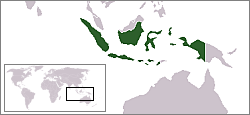
source of picture: http://upload.wikimedia.org/wikipedia/commons/c/ce/LocationIndonesia.png

Read More......

Wednesday, June 20, 2007

Inti Kapuas cooperates with CP Prima to culture Arowana Super Red


PT Inti Kapuas Arowana (IIKP) collaborating with PT Central Proteinaprima (CP Prima) will do research and aquaculture of Arowana "Super Red". The secretary of IIKP, Hendri Hamzah, said in the report to JSE (Jakarta Stock Exchange) that the collaboration was in the scope of genetics, disease, and nutrition of Arwana. Hendri said that with this collaboration we hope we acquire important results to increase the productivity of the Arowana aquaculture.

Meanwhile the director of IIKP said that the collaboration with CP Prima was important since CP Prima has the biggest and the most complete aquaculture laboratory. CP PRima has also succeded in research and development in the aquaculture field especially shrimp and fish feed and also management of shrimp ponds.

The IIKP itself is the biggest company that is involved in conservation, culture and marketing of Arowana "Super Red" in Indonesia. This company is one of the 3 company in the world that conserves the arowana.

Source:
http://www.antara.co.id/arc/2007/5/4/inti-kapuas-gandeng-cp-prima-budidayakan-ikan-arwana-super-red/

Photo from http://www.unoaquatic.com

Read More......

Tuesday, June 12, 2007

Japfa Comfeed latest moves

Poultry and aquaculture firm PT Japfa Comfeed in Indonesia is enhancing production capacity with the construction of two new factories costing Rp 100 billion (US$ 11.3 million).

The company will issue its first bond, worth Rp 500 billion (US$ 5.6 million), in June 2007, for the new factories, which are currently under construction in their location in Bati Bati, South Kalimantan, and in Padang, West Sumatra, Indonesia.

more news from World Poultry.

Read More......

West Kalimantan Province will develop Barramundi Aquaculture

An Initiative to Learn From Australia How to Manage Modernized Aquaculture


The important factors in Fisheries and Aquaculture is the human resource, technology and research. The Australian Fisheries Academy (AFA) located at Adelaide, South Australia, has an important position in fulfilling the previous matters. The academy opens its arms to developing new network and cooperation with other institution. Therefore this opportunity was captured by the Governor of West Kalimantan, Indonesia named Usman Jafar.


The visit to the AFA by the Governor of West Kalimantan was accompanied by Head of Services, welcomed by Steve Mawer, the chairman of Aquaculture Council, South Australia. Also Mark Cody, the director of PT Lugay Samudera, was present at that moment.

The Barramundi (Lates calcalifer) itself is a favorite fish in the fish market. The request from Europe, Hongkong, Dubai, Hawai tends to increase. The price of Barramundi itself is around AUD 11 per kilogram.

Budi Hariyanto the head of Fisheries Service in West Kalimantan said that the opportunity to develop this aquaculture species is possible in the region, but probably the application of new technology is still unreachable since it is still expensive.

Mark Cody offers a cooperation if there are any investors interested. One of the main factors is the potential of the location of West Kalimantan which is relatively close to the world market (Japan, Abu Dhabi, Hongkong and Malaysia). Meanwhile the demand of the fish is also increasing.

Picture taken from Wikipedia.
News Source: Pontianak Post

Read More......

Aquaculture Project Vacancy in Aceh!

National Consultant Aquaculture Specialist (NCAQ-ARC)
Food and Agriculture Organization of the United Nations (FAO)
Rehabilitation Support Coordination Unit (RSCU)
Location: Indonesia (Banda Aceh, Aceh Province, Sumatra)

Closing date: 15 Jun 2007 (hurry up!)
Job Description Under the general supervision of TCEO and FAO Representative in Indonesia, the direct supervision of the FAO-ARC Project Coordinator and the guidance and direct technical supervision of the FAO International Aquaculture Consultant, and in cooperation with the National Coordinator, the National Consultant Aquaculture Specialist

further details follow the link below!

National Consultant Aquaculture Specialist (NCAQ-ARC)
http://www.reliefweb.int/rw/res.nsf/db900SID/OCHA-742HM2?OpenDocument

Read More......

First Post!

Dear Readers,

Indonesia is a country that has many resources for aquaculture. Many people do not know the actual development of Indonesian aquaculture because one factor is there is a lack of available information or contents concerning this subject. This blog will present important information and news concerning Indonesian aquaculture. The source of news is acquired from various local websites in Indonesian language also main events concerning aquaculture.

Thank you for your attention, If you find this site useful, I hope you could use the RSS feed or visit this blog regularly to check the newest information.

Best Regards!
Roffi Grandiosa
akuatika.net

Read More......